

Saturday
Jan192013

An Aspirin a Day May Take Your Vision & Hearing Away!

            Non-steroidal anti-inflammatory drugs (NSAID's) are widely used for general pain relief and specific inflammatory control after an injury. Additionally, there is an increasing number of people that are using specific NSAID's and aspirin for perceived cardio-vascular protective effects. Of concern, there have been a number of scientific publications discussing the potential negative health effects of regular use of NSAID's whether for prevention, pain, or other use. Two recent publications have identified some serious negative health risks that appear to be linked to regular aspirin and NSAID use:

  • The Beaver Dam Eye Study1

            In a longitudinal population-based study of age-related eye diseases, Klein and colleagues1 examined the association of aspirin use with the incidence of age-related macular degeneration (AMD). They performed examinations every 5 years over an approximate 20-year period (1988-2010). There were 4,926 participants between the ages of 43 to 86 years. Study participants were asked if they used aspirin at least twice a week for more than 3 months; which they termed 'regularly'.

            The study identified that 'regular' aspirin use 10 years prior examination was associated with late AMD with an estimated incidence of 1.76% in regular users versus 1.03% in non regular aspirin users. Klein and colleagues concluded: "...regular aspirin use 10 years prior was associated with a small but statistically significant increase in the risk of incident late and neovascular AMD."

  • Hearing Loss from Department of Medicine, Brigham and Women's Hospital in Boston, MA2,3

            In 2010, Curhan and colleagues2 examined "the independent association between self-reported professionally diagnosed hearing loss and regular use of aspirin, nonsteroidal anti-inflammatory drugs (NSAIDs), and acetaminophen." The participants were 26,917 men between the ages of 40-47 beginning in 1986 and were administered a follow-up every 2 years for the duration of the study. They2 found: "For NSAIDs and acetaminophen, the risk increased with longer duration of regular use. The magnitude of the association was substantially higher in younger men. For men younger than age 50 years, the hazard ratio for hearing loss was 1.33 for regular aspirin use, 1.61 for NSAIDs, and 1.99 for acetaminophen".

            In a follow up investigation in 2012, these authors3 prospectively evaluated the frequency of aspirin, ibuprofen, and acetaminophen use and risk of hearing loss in 62,261 women aged 31-48 years. In this study of females, the regular use (2 or more times per week) of ibuprofen and acetaminophen (not aspirin) was statistically linked with an increased risk of hearing loss.

References

  1. Klein BEK, et al. Long-term Use of Aspirin and Age-Related Macular Degeneration JAMA. 2012;308(23):2469-2478.
  2. Curhan SG, Shargorodsky J, Eavey R, Curhan GC. Analgesic use and the risk of hearing loss in women. Am J Epidemiol 2012;176(6):544-54.
  3. Curhan SG, Eavey R, Shargorodsky J, Curhan GC. Analgesic use and the risk of hearing loss in men. Ann J Med 2010;123(3):231-237.
Saturday
Jan192013

The Passing of a Chiropractic Pioneer, A Family Man, A Dear Friend & Mentor to Countless  

            Most of the profession is already aware that Dr. Sidney Earl Williams, founder of Life University in Marietta, passed away peacefully in his sleep early Thursday morning the 27th of December. He was 84 years old. Visitation was set from 2 to 4 p.m. on Saturday, December 29th, 2012, at Mayes Ward-Dobbins Funeral Home in Powder Springs and services were held at 2 p.m. on Sunday, also at Mayes Ward-Dobbins, located at 3940 Macland Road in Powder Springs.

            Along with his wife, Dr. Nell Williams, Dr. Sid Williams founded Life Chiropractic College in 1974, which became Life College and is now Life University. Twenty Two students attended the first classes in January of 1975. These students became known as the "Day one class". Under Dr. Williams’ direction, Life Chiropractic College became the largest chiropractic college in the world with an 89-acre campus and more than 3,500 students.

            On a personal note, for me (Dr. Deed Harrison), I was deeply touched by Dr. Williams loss. Though I met Dr. Williams just a handful of times and exchanged only simple cordial conversation; it is man like him that keeps a person like me continuing to strive for excellence through Chiropractic principles, purpose, and passion. When I heard of Dr. Williams loss, I was reminded of one of my late father's (Dr. Don Harrison) favorite sayings: "The person who says it cannot be done, should not interrupt the person doing it"! Looking at Dr. Williams' life achievements I bet that he lived by this motto in some regard. In the end, Dr. Sid Williams did what few of us can but all of us strive for; he left Chiropractic and the World a better place through his humanitarian, personal, and entrepreneurial achievements.

            A Williams family statement Thursday morning (December 27, 2012) said: "Doc was a person of immense presence and personality. He will be greatly missed by his family and many others whose lives he has touched."

            In addition to his wife, Dr. Williams is survived by his children, Dr. Kim Williams, of Powder Springs, and Dr. John Sidney Williams, of Pennsylvania; and three grandchildren. In lieu of flowers and cards, contributions on behalf of Dr. Williams and his family can be made to: The B.J. Palmer Historic Home Foundation, Inc. 1950 Old Concord Road, Smyrna, GA 30080 or at www.bjph.org.

Tuesday
Dec182012

Colorful Olympic Tape for our Patients – TAPING MOVEMENT, NOT MUSCLES

Steven Capobianco D.C, DACRB, CCSP

Medical Director, Rock Tape.

www.rocktape.com


INTRODUCTION

            “Kinesiology tape” was first used by acupuncturists and chiropractors in Japan over 20 years ago. Today it is used by practitioners throughout the world in the treatment of injuries and to improve sports performance.

It was apparent that world-class athletes were seeking an alternative to managing pain and maximizing recovery potential at the 2012 London Olympic Games. Practitioners and spectators alike witnessed athletes, from the diving platform to track and field, wearing colorful tape in intricate patterns and with questions of what it was, word began to spread.. While the use of kinesiology tape is often associated with athletes, the reality is that kinesiology tape is effective for a wide variety of problems, not just sports injuries.

The evidence supporting the role of kinesiology tape still lacks high-level clinical trials, but if you spend the time to research further you will start to see a trend. This trend was spearheaded by Thibaud (Feb 2011), and reported the effects of taping the skin in subjects that are compromised, either fatigued or injured. They found that the skin acted as an auxiliary kinesthetic system providing the brain with postural awareness when the compromised muscle/joint receptors were fatigued.  

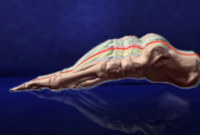
Kinesiology tape, developed and refined for the past 35 years, attempts to mimic the qualities of the skin in its elasticity and thickness. With these qualities in mind, the tape is applied on the skin in certain patterns to enhance certain physiological processes.  Once applied to the skin the elastic capacity of the tape  provides a light shear augmenting the mechanoreception of the area addressed. This  same elastic recoil aids in pulling the epidermis and dermis layers of skin away from the underlying fascial compartments, thus improving fluid dynamics (acute/chronic edema) (Ya-Hui Chou). Both of the above processes have a substantial benefit in down-regulating nociception (pain), in return improving movement patterns in accordance to the area addressed with tape. Lastly the tape in its ability to enhance kinesthetic awareness through skin stimulation, can improve postural dysfunction. Careful application of tape along “fascial strain lines” has been shown to improve common postural dysfunctions such as upper and lower cross syndromes, hyper and hypolordosis, anterior/posterior tiling of the pelvis, and more (see figure 1).

SUMMARY

The refinement of kinesiology taping has extended from the traditional anatomical (muscle) applications to the more integrated fascial (movement based) applications. This innovative way of taping has revised some new and improved taping applications that have shown to improve movement dynamics, such as postural sway associated with compromised environment like pain and fatigue states, as discussed earlier in the science of taping. Athletes, such as those in the Olympic Games, are interested in the advancement of taping technology. With this added interest in “legal” performance enhancement which doesn’t involve drugs, athletes and coaches are looking for an edge in other alternatives including kinesiology tape. By enhancing our body awareness via movement taping, we can improve the length-tension relationships of the associated muscles, and, in turn, improve the neuromuscular efficiency of the intended activity.

Recently, the Garmin-Barracuda professional cycling team has implemented this model of taping to improve postural position on the bike to optimize power outputs during long cycling time trials. The team’s physicians believe that the tape, applied in specific patterns, improves form which translates to a faster time with less incidence of injury. This all translates into improved performance without the use of illegal enhancements. Future studies on the effects of stimulating the largest organ in our body (the skin) via kinesiology tape, is a new direction to investigate with regards to improving proprioception, posture and performance.

References


  1. Fuller, R.B. 1975. Synergetics. New York: Macmillan
  2. Ya-Hi Choi, et al. Manual Lymphatic Drainage and Kinesio Taping in the Secondary Malignant Breast Cancer-Related Lymphedema in an Arm With Arteriovenous Fistula for Hemodialysis. American J. of Hospice and Palliative Med. 00 (0) 1-4, (2012).
  3. Fascia Congress. 2009. www.fasciacongress.org/2009
  4. yers, T.W. 2009. Anatomy Trains: Myofascial Meridans for Manual and Movement Therapists.  New York: Churchill-Livingston.
  5. Thibaud, et al.Degraded postural performance after muscle fatigue can be compensated by skin stimulation. Gait and Posture 33 (2011) 686-689.
  6. Hyun Mo An, et al. The effects of kinesio tape on lower extremity functional movement screen scores. International J. of Exercise Science 5 (3): 196-204 (2012). 


Tuesday
Dec182012

Strong Extension-Based Exercise of the Cervical Spine - A Case Series

Don Meyer, DC

Private Practice Huntington Beach, CA

President Circular Traction Supply

CBP Instructor


INTRODUCTION

            In a recent paper published in the Journal of Rheumatology, the Cervical Overview Group conducted a large-scale meta-analysis of existing literature concerning the management of mechanical neck disorders, including radiculopathy(1).  The categories of evidence ranged from strong evidence, to moderate evidence, to limited evidence, to evidence of no benefit.  The only regimes that managed to make it into the highest level of evidence were [combined] stretching/strengthening exercise and mobilization/manipulation.  Medical prescriptive interventions failed to make the cut.

            So now that we know that along with manual manipulation, a stretching/strengthening exercise program is one of the most evidence based therapies we can provide a post-acute or chronic patient with mechanical neck problems.  But what is the best method to apply these exercises?    

            Applying a strong anterior load into the posterior cervical region while the patient actively performs extension-based range of motion neck exercises is a relatively new and unique concept within the healing arts.  Exercise straps have been invented that recommend a “gentle” resistance to various neck range of motion exercises and assist in stretching the neck (2).  These devices were not designed to provide a strong progressive anterior load into the user’s neck.  A more recent exercise device uses a spring-like design to apply a strong extension load to the posterior neck muscles, but again recommends only a mild anterior load (4-6 lbs.) be applied into the posterior cervical region (3).  In fact, it is designed to prevent a strong anterior pull from being applied into the neck by the posterior spring assembly.   

            In the early 2000’s, Deed Harrison, D.C. started instructing Doctors of Chiropractic at CBP®  seminars how to take a padded strap and forcibly pull the upper thoracic and lower cervical spine into flexion while actively extending the head and upper cervical spine.   

            I took Doctor Deed Harrison’s idea of extension exercising of the neck with a padded strap and extrapolated upon it. I added Theraband™ resistance tubing offered at three different resistance levels, padded hand grips and a rehabilitative program of eight isotonic ranges of motion and posture corrective exercises.  See Picture One.  I first used this new exercise device on myself and then offered it to six of my chronic neck pain patients to try out at no cost.  Three of these patients had completed postural/structural corrective in-office treatment and were on monthly maintenance care.  What follows are the result with my own cervical condition as well as the six other participates.   Pre and Post pain questionnaires, lateral cervical radiographs and computerized range of motion findings are provided with most cases.


Picture One – Pro-Lordotic Neck Exerciser


DISCUSSION

            The Table in Picture Two illustrates that of the seven cases, four had severe DJD, one moderate, one mild and one had no DJD.  One patient was in their early thirties, two were in their late forties, two in their early fifties and two were in their sixties.  There were two males and four females.  All the individuals had chronic neck pain.

In two of the cases, pre/post ROM studies were not performed.  But in the five cases where pre/post studies were performed, they all showed improvement with regular use of the Pro-Lordotic Neck Exerciser.  Case five achieved higher than normal ROM values even with severe degenerative joint changes.

All of the cases experienced some degree of pain relief from regular use of the Pro-Lordotic Exerciser.  Case one and two experienced a complete relief of their pain.  Case three denoted a 98% reduction of arm paraesthesia and a complete relief of neck pain.  Case four and five had a complete resolution of their shoulder/arm or hand pain and notable reductions of neck pain.  Case six and seven also related having notable reductions of neck pain to minimal levels.  Five of the cases that had performed in-office traction, exercise and manipulative rehab achieved higher levels of pain relief through the continued use of the Pro-Lordotic Neck Exerciser.

Four of the seven cases reduced their ADL restrictions with the regular use of the Pro-L Neck Exerciser.  One case had no ADL restrictions and two cases ADL restrictions did not reduce.  Two of the cases that were on monthly maintenance care of spinal manipulation only saw their ADL restrictions further reduce with regular Pro-Lordotic Neck Exercises.

All seven of these chronic cases achieved some degree of cervical curvature correction with regular use of the Pro-Lordotic Neck Exerciser.  Cases two and four achieved more correction with this home exerciser than what they were able to accomplish in-office with expensive cervical curvature traction devices.  Case three started his curvature correction in-office and was able to continue correcting it with the home exerciser.  Case five and six had lost some of their in-office corrections over time and were able to retain some of this lost curvature with the home exerciser.  Case seven achieved all of her correction with the home exerciser.

Cases three and four were the only two cases to have true radicular symptoms all the way into their hands.  Both of these cases were able to either completely or almost completely resolve these symptoms with regular use of the Pro-Lordotic Neck Exerciser.

Most importantly, all seven of these cases received enough relief of pain and increase function to what to continue their home use of the device for long periods of time.  All of the cases reported being able to control their condition, to some degree, with regular use of the Pro-Lordotic Neck Exerciser.

Picture Two

Category

Case 1

Case 2

Case 3

Case 4

Case 5

Case 6

Case 7

Sex

Male

Female

Male

Female

Female

Female

Female

Age

53

62

68

54

49

47

32

DJD Stage

Moderate

Severe

Severe

Severe

Severe

Mild

None

Increased ROM with Pro-L Neck Exercises?

Unknown

Unknown

Yes

Yes

Yes

Yes

Yes

Increased ROM with Pro-L Neck Exercises after Active In-Office Rehab.?

N/A

Unknown

Yes

Yes

Yes

Yes

N/A

Pain Relief with Pro-L Neck Exercises?

Yes

Yes

Yes

Yes

Yes

Yes

Yes

Pain Relief with Pro-L Neck Exercises after Active In-Office Rehab.?

N/A

Yes

Yes

Yes

Yes

Yes

N/A

Decreased ADL Restrictions with Pro-L Neck Exercises?

Yes

N/A

Yes

Yes

No

No

Yes

Decreased ADL Restrictions with Pro-L Neck Exercises after Active In-Office Rehab.?

N/A

N/A

Yes

Yes

No

No

N/A

Improved Cervical Curvature with Pro-L Neck Exercises?

Yes

Yes

Yes

Yes

Yes

Yes

Yes

Improved Cervical Curvature with Pro-L Neck Exercises after Active In-Office Rehab?

N/A

Yes

Yes

Yes

Yes

Yes

N/A

Relief of Radicular Symptoms with Pro-L Neck Exercises?

N/A

N/A

Yes

Yes

N/A

N/A

N/A

Long Term Relief of Symptoms with Pro-L Neck Exercises?

Yes

Yes

Yes

Yes

Yes

Yes

Yes


References

  1. J Rheumatol


Tuesday
Dec182012

Combining Specific Chiropractic Adjusting Techniques with CBP Corrective Care Techniques

Todd Pickman, DC

Private Practice of Chiropractic Eagle, ID

Gonstead Technique & CBP Trained Chirorpactor


Deed E. Harrison, DC

President CBP Seminars, Inc.

Vice President CBP Non-Profit, Inc.

Chair PCCRP Guidelines

Editor—AJCC 


 INTRODUCTION

            We've all heard the Chiropractic adage that 'all techniques work'. This is likely true but we first need to define what is meant by the term 'works'. If we assume that what is meant by 'works' is that all techniques are able to improve joint mobility, posture mobility, and reduce pain and muscle hyper-activity by reflexo-genic inhibitor effects, then this statement holds some merit. However, certain specific segmental adjusting techniques have more research validating this statement than others. For example, using the Gonstead Technique system of analysis and adjusting, Nansel and colleagues1 found statistically significant improvements in cervical lateral bending motion responses following one specific adjustment to the restricted side of the cervical spine.

            In contrast, if we assume that what is meant by 'works' is that all techniques are able to improve the alignment of generalized abnormal sagittal plane curvatures, then this statement does not hold merit. For example, using the same Gonstead Technique system of analysis and adjusting, Plaugher et al2, found no measurable change in the cervical and lumbar lordosis in 50 patients receiving several adjustments. Regarding CBP Technique corrective methods, statistically significant improvements in sagittal plane alignments have been identified in several clinical control trials examining patients suffering from chronic low back and cervical spine disorders.3-6

            So what does the above information indicate? In our opinion, the above indicates that the astute Chiropractor should become skilled at administering both a segmental specific adjustment technique and a full spine corrective technique like Chiropractic BioPhysics (CBP). In this manner, patients will experience the benefits of segmental motion restriction improvement and the restoration of proper full body and spine alignment. The case presented herein attempts to provide initial rationale for the combination of two uniquely distinct, but complimentary full spine Chiropractic Technique systems.

Case Study:

            Approximately, 6. 5 years ago (in 2006), a 74 year old female presented to one of the author's (T.P) practices seeking care for the relief of functional disabilities related to a chronic low back condition. At this time, the Chiropractic clinician (T.P) exclusively adhered to and utilized the Gonstead Technique system of analysis and adjusting for identified spine subluxations including:

  1. Abnormal temperature differential patterns (nervo-scope / tempo-scope).
  2. Static palpation data indicating the presence of edematous tissue around the injured segment.
  3. A decrease in motion of the segment in question, as compared to the surrounding area.
  4. Palpable muscle spasm or splinting around the area in question.
  5. Visualization of the area (looking for presence of pitting edema, asymmetry in the tissues, etc).
  6. Then, consulting the 3-shot, digitally stitched, AP full spine x-ray and the lateral (2 shot) full spine x-ray to analyze the “foundation principle” and relate this to the examination findings.

            At this time, the patient was recommended and consented to a program of care consisting of Gonstead adjustments at a frequency of 3 times for 2-weeks, 2 x per week for 4 weeks, and then 1 x per week for 6 weeks. At this point the patient was improved to some extent (not completely) and was placed on a Chiropractic maintenance schedule consisting of 1-4 x per month sessions of adjustments over the course of 6 years. Through the course of this 6-year time period the patient would have episodic acute flare-ups of her chronic low back conditions that would improve with Chiropractic. The patient averaged a minimum pain intensity of 4/10 over the course of these 6-years with flare-ups reaching 8/10 on a numerical rating scale.

  • Feb 2012 Findings: In February of 2012, the Chiropractor (T.P.) informed the patient that he had learned a new approach to full spine corrective Chiropractic (CBP Technique) and that he believed she was a candidate for this 'new' system. The patient was recommended and consented to a 36 visits, 3-month, corrective care program consisting of the combination of Gonstead Technique (segmental adjusting applied to the cervical, thoracic, and lumbo-pelvic regions) and CBP Technique. Her pain scale was a 7/10, she reported difficulty walking more than 1/4 mile distances without severe thoraco-lumbar pain, fatigue, and spasm, all while wearing a back brace. 
  • Radiographic Findings:

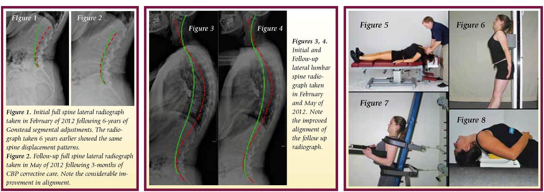
      Lateral Full Spine Radiograph:  In February, 2012 a new digital full spine lateral radiograph of the patient was obtained. See Figure 1. The radiographic analysis was done using the PostureRayÒ computerized radiographic measurement system. Qualitatively, the patient’s radiographic displacements are shown in Figure 1 as the path of their posterior vertebral body margins from C2-S1 relative to an idealized spine model in upright stance developed by Harrison and colleagues.7 The patients follow up full spine lateral radiograph after 3-months of CBP Technique is shown Figure 2. Note the remarkable improvement in alignment, whereas previously, for 6 years no such improvement was identified with Gonstead Technique alone.

      Lateral Lumbar Spine Radiograph:  In February, 2012 a digital lateral lumbar radiograph was obtained. See Figure 3. The radiographic analysis was done using the Posture RayÒ computerized radiographic mensuration system. The patient’s radiographic displacement values are shown in Figure 3 and are compared against normal.7 The patients follow up full spine lateral radiograph after 3-months of CBP Technique is Figure 4. Note the remarkable improvement in alignment where for 6 years no such improvement was identified with Gonstead Technique alone.

Interventions: The primary course of interventions included CBP mirror image® adjustments, exercises, and traction to reduce her full spine postural and spine displacements. The treatment frequency was 3 times per week for 40 visits over approximately 12 weeks. The Patient presented to and actively participated at all appointments. Each visit consisted of mirror image adjusting, mirror image exercises and traction to reduce her abnormal posture displacements.

  • Mirror Image Adjustments

The patient was administered mirror image adjustments to correct posterior thoracic translation with hyper-kyphosis and anterior head translation with head flexion postures. See Figures 5.

  • Mirror Image Exercises

The patient was administered mirror image adjustments to correct posterior thoracic translation with hyper-kyphosis and anterior head translation with head flexion postures. See Figures 6.

  • Mirror Image® Traction

      Mirror Image traction care was administered to the patient. The patient received traction in the standing posture as shown in Figure 6. In addition the patient was instructed in the use of the denneroll thoracic orthotic and was advised to do this 5-7 times per week at home. See Figure 7.

  •  Case Outcome Subjectively, at the end of the 1st month of corrective care, the patient was remarkably improved; NRS = 1-2 / 10. Her low back condition improved to where she was able to walk 3-miles without the use of a low back support and without debilitating pain. According to the patient, in her own words, "I do know that I'm experiencing a life change for the better...I'm singing the praise for the treatment (CBP Technique--added for clarity) and how great I feel".


CONCLUSION

            The authors' opinion is that the patient's improvement is directly related to the spinal corrective procedures applied using CBP Technique. Accordingly, for optimum patient response, traditional Chiropractic adjustments would seem to be enhanced by the addition of spinal corrective procedures as in CBP. In the end, it is the positive response of the patient that should dictate this combined approach of classical Chiropractic care, with more contemporary corrective Chiropractic systems.

References

  1. Nansel DD, Cremata E, Carlson J, Szlazak. J Manipulative Physiological Ther 1989;12:6:419-427.
  2. Plaugher G, Cremata EE, Phillips RB. J Manipulative and Physiol Ther 1990.
  3. Harrison DD, Jackson BL, Troyanovich SJ, Robertson GA, DeGeorge D, Barker WF. J Manipulative Physiol Ther 1994;17(7):454-464.
  4. Harrison DE, Cailliet R, Harrison DD, Janik TJ, Holland B.  Archives Phys Med Rehabil 2002; 83(4): 447-53.
  5. Harrison DE, Harrison DD, Betz J, Janik TJ, Holland B, Colloca C. J Manipulative Physiol Ther 2003; 26(3): 139-151.
  6. Harrison DE, Harrison DD, Cailliet R, Janik TJ, Holland B. Arch Phys Med Rehab 2002; 83(11): 1585-1591.
  7. Harrison DE, Harrson DD, Haas JW, Oakley P. Spinal Biomechancs for Clinicians, Vol I. Evanston, WY: Harrison CBP Seminars, Inc., 2003, ISBN 0-9721314-2-6.
Tuesday
Dec182012

Cheapening of Chiropractic

Randall Hammett, DC

Private Practice of Chiropractic


INTRODUCTION

            Its funny how in tough financial times,  especially for healthcare professionals, dermatologists are opening medical spas, orthopedic surgeons are opening exercise and PT clinics and chiropractors are adding all types of non-chiropractic services to make a living. In 33 years of practice I have experienced three large economic downturns in the United States, during this economic upset I have watched chiropractors and other professionals make strange choices in increasing their incomes. Recently a chiropractor was sentenced for importing and prescribing HCG for his patient’s weight loss scheme. Another is sentenced for billing services without rendering them, and another is sentenced for practicing outside his limitations. Another chiropractor is offering $10 adjustments as a spinal screening, no examination or x-rays needed. On and on it goes with the unusual solutions to financial woes.

            Unfortunately, chiropractors for far too long have been potty trained by the insurance industry, the government and the public on what their care is essentially worth. We been told by PPO’s that we are worth a certain amount and we become to believe this as a fact... Medicare tells us that an adjustment is worth a certain amount of money and we begin to believe that also. The poor mentality permeates the profession like the black plaque in Europe did. On a daily basis chiropractors ask themselves, what will the government think? The board? The PPO? In fact many chiropractors spend much time thinking about what others think, they forget to think about themselves and that my fellow chiropractors is death in your practice.

            Chiropractic consultants around the country profess that they have your answers. Really then why are they not in practice full-time earning a living that they profess they’re going to teach you? The general wonder if BJ Palmer or Clarence Gonstead had a practice management consultant. Doubtfully. What they did have was an innate sense of what public needed and wanted and provided that to them in an expert, economical manner.

            First, the insurance war is over, we lost! You get the crumbs of third-party reimbursement and nothing more. Second, the good news is you’re still in charge of your own business or practice to a certain extent. Success in your practice is still about you and what you care about. Face facts, it was you who sat through all the thousands of hours of schooling, sat through state and national boards in humiliation. It was you who tried to make every detail of your office patient friendly and economical. It was you who looked over everything so that you could improve your family’s lifestyle. It was your ability to help others achieve health and mastering that alone improved and increased your practice volume. Think about this as your true worth from your lifesaving, life improving spinal adjustment worth $18.75? Is it worth charging $10 a spinal screening special? Think! Gee have a brain. What is your time and talent worth in your community?

            The cheapening of chiropractic starts on the inside of each of you, just as the answers are inside of each of you. The coming of national health insurance, ever limited third-party coverage should paint a picture of what you’re doing right now with your practice and your mindset as far as the finances of your practice. Place your focus solely on the best patient care you can provide as well as charging correctly for the services that you provide and you will survive, step out of these bounds and you will parish. Till next time.

Till next time,


Tuesday
Dec182012

Mirror Image & Functional Posture Correction Exercises… Anywhere Anytime!


Joseph Ferrantelli, DC

CTO CBP Seminars;

CEO PostureCo, Inc


David Cruz, DC

CEO WebExercises, Inc.


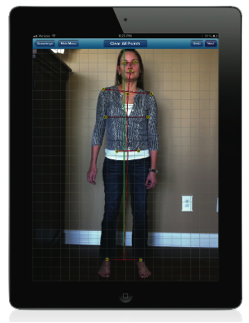
            We are pleased to announce a strategic partnership between PostureScreen Mobile and WebExercises. PostureCo, Inc., is a technology company focusing on posture analysis and EMR products for structural based healthcare professionals. PostureCo’s products such as PostureScreen Mobile® and PostureRay® X-Ray EMR use computer/digital images from a variety of formats to digitize specific anatomical locations thereby generating quantitative documentation to support and improve the efficacy and quality of patient care (Figure 1).


Figure 1: PostureScreen Mobile example of an AP postural analysis.

            WebExercises®, founded by Dr. David Cruz is a one-of-a-kind exercise prescription software program used by health and fitness professionals for prescribing corrective and rehabilitative exercises. WebExercises® was developed over seven years ago with the initiative to improve the quality of people's lives through exercise. This has allowed WebExercises® to quickly become the industry standard for increasing clinical efficiency while improving the patient experience.

            Together, this partnership has raised the bar of clinical efficiency and efficacy allowing the doctor to accurately evaluate a patient’s posture and prescribe rehabilitative and corrective exercises in minutes. This strategic alliance also includes Dr. Deed Harrison’s CBP® Mirror Image® Exercises (Figure 2).


Figure 2: Sample Mirror Image® Exercise for Thoracic to Pelvic Postural Subluxation.

            In addition to being a significant time saver for doctors, it will also provide a better patient experience. This is achieved by delivering patient specific exercise programs via email allowing them to print and view video demonstration using a highly encrypted HIPAA compliant delivery system. Patients will no longer have a vague memory of an exercise. They will no longer have to rely on memory for what they're supposed to do and how many times they're supposed to do it. They will no longer say, "Was I supposed to rotate my head this way? Was I supposed to turn my shoulders that way?"

            As doctors of chiropractic, the “standard of care” dictates we integrate active care into our practice providing patients with exercises that are best suited for their rehabilitative and corrective needs. PostureScreen Mobile enables you to become a posture and corrective exercise expert by giving you the ability to quickly and easily assess and create concise personalized exercise programs.  All exercises employ low-tech equipment designed to be performed in the clinic or at home. Regardless if you’re a skilled CBP practitioner or utilize another technique, you will find that PostureScreen Mobile will be a great addition to your clinic.


Figure 3: Video Clip of a cervical translation resistance exercise. Unique to the WebExercises platform is online streaming video tutorial so your patient can learn exercises while at home.

            In addition to this new exercise program, is the inclusion of Denneroll specific protocols providing “PATIENT CENTERED” instructions.  PostureScreen Mobile will deliver print and video instructions on Denneroll orthosis which will be narrated and demonstrated by Dr. Deed Harrison. This education will be available for all regions of the spine in terms your patients can understand. 


            The doctor will choose the corresponding Denneroll home traction protocols in PostureScreen Mobile and simply ‘send’ it to their patient who will then receive an email with clear and concise instructions on the proper use of the Denneroll traction system.  This is not a ‘one size fits all’ rehabilitative program that many practitioners buy into but a simple yet effective program that can be individually tailored for each patient allowing them to attain their health and wellness goals.  Nothing on the market has ever been this simple!

            Currently, the PostureScreen Mobile application is rated consistently among the TOP 10 on the iTunes App Store in the Health and Fitness category, as well as being picked as a “Top Must Download” by both Details Magazine and GQ Magazine in Australia!  To learn more about postural assessments and corresponding postural exercise programs, visit us at www.PostureAnalysis.com.

Monday
Dec172012

Stop Speaking ABOUT a Subluxation TO a Person and Start Speaking TO a Person WITH a Subluxation.

Fred DiDomenico, DC

Practice Coach and Mentor

www.elitecoachingllc.com


INTRODUCTION

            I receive many calls from Chiropractors all over the country who have been with different management groups.  I realize many management groups are all different variations of the same thing.  The different variations are dependent upon the personality of the founder(s) communicating traditional chiropractic. What does this mean? Although there is benefit from every group, they all teach us to speak ABOUT a subluxation TO a person rather than speaking TO a person WITH a subluxation. 

            Truthfully speaking a subluxation, whether globally subluxated by posture or segmentally within an abnormal curve, a subluxation is still a FACT.  Since the general public does not typically see a subluxated posture as a life or death decision like cancer, which they are familiar with, it is up to us, chiropractors, to help them see this fact.   The question is, “How do we help patients FEEL the same URGENCY about a subluxated spine and posture as they would cancer?” 

            The challenge is people make decisions according to how they FEEL, not what they think.  Showing a patient an x-ray and telling them ABOUT a subluxation does not create the urgency or the understanding of a life or death decision. Do you know how your patients FEEL about their condition?  Do you ask?

            A person WITH a subluxated posture is an emotional being.  Speak TO that individual and understand how they FEEL with a condition that will threaten their life.  First of all, DO YOU BELIEVE IT WILL THREATEN THEIR LIFE!  They will believe proportional to the amount you are convicted to your belief.  An example of speaking TO a person WITH a subluxation is, “Mrs. Jones, how do you FEEL that you’ve lost the curves in your spine causing extreme stress and tension on the spinal cord shutting down the energy to your organs progressively weakening your immune system, your digestive tract, reproductive organs and slowing your metabolism? In fact, your body is aging faster every day as your spine continues to collapse? How does that make you FEEL?”  It is the FEELING that will inspire her to commit.  You would then ask her spouse, “Mr. Jones, how do you FEEL knowing your wife’s metabolism is getting weaker every day as her weakened spine and posture collapses? She is wearing her body out?  How does that make you FEEL?”  His answer regarding his emotion is the key to his commitment to help his wife.  ALWAYS use the spouse’s feelings to influence patient commitment.

            Since people are emotional beings making decisions from an emotional perspective, we need to learn advanced communication to speak to different types of personalities and emotions regarding their OVERALL health, NOT arthritis or their PAIN.  Speaking about arthritis is a condition with NO urgency, they have time. Speaking to their emotions about their pain is very temporary. When their pain is gone, so is their emotional attachment. Many management groups attempt to build value on these two conditions.  Both will lead to some people walking out of your office.  We must think BIGGER and help people see their ORGAN health from an emotional perspective.      

            Have you ever noticed in your ROF the patients you resonate with always sign up vs. the patients you don’t know how to connect with almost never sign up?  This is a personality dependent practice and will keep you a prisoner of your practice. 

            Do you know how to communicate with a victim, someone who is hopeless, someone who always has to be right, someone who doesn’t like chiropractors, a timid person vs. a AA, CEO personality, etc.  These are all examples of different types of emotions people walk in your office with that may not be committing to your care because you have not been trained how to communicate effectively with them.  Speaking ABOUT a subluxation to these people may not work and they walk out of your office.  In reality, they deserve to live a subluxation free life too.

            Communication training applied to Chiropractic will shift your whole perspective on your practice and your success.  When you learn how to deal with people’s emotional state their commitment level to your care will jump through the ROOF!  Call about the Elite Coaching Advanced Communication Training Boot Camps. They are guaranteed to open your eyes to a whole new level of purpose, practice and vision for your practice.

Monday
Dec172012

Chiropractors Don’t Apply

Eric Huntington, DC

Co-Owner Developer of the Chiropractic Business Academy

drhuntington@chirobizacademy.com


INTRODUCTION

            Keys to Practice Success:  It may seem inconceivable that the majority of practice owners don’t know what I am about to tell you.  But this is probably true, as evidenced by the condition of most clinics.  At best, some practice owners may know pieces of this data but don’t apply it.  However, with just a little study, you could use it to flourish and prosper in practice.

Defintion of “Hat”:  The use of the word “hat” in this article means “the job duties assigned to a position in an organization including what that post is supposed to accomplish”.

  • ·      The Owner Hat:

            When I refer to the “owner hat”, I am clearly differentiating it from what most practice owners do on a daily basis.  An owner may wear OTHER hats, such as the doctor hat, the ROF hat (sales), the Insurance hat, or any other hat within the organization.

            But the true owner hat in a chiropractic practice encompasses things such as goal setting, determining plans of action, handling legal and compliance issues (at least overseeing them), managing key staff (not all the staff), and Public Relations (not marketing)—among other things.

            Goal Setting: The owner determines where the organization is going, short-term and long-term.  This is a crucial and should be done on a regular basis.  However, most owners wear this hat for only a few months prior to opening the clinic and then drop it for the rest of their career.

            Prior to things such as the internet and devices such as cell phones, the chiropractor of yesteryear operating a slow practice, probably used the agonizing hours between patients to dream up the future—and ways to get there.  Today, it’s easy to fill that time text messaging friends, or surfing the net.  It’s important to recognize that there is a big difference between wishing one had more money or a better practice and actually determining goals and figuring out the best strategy to achieve them.

            Unknown to most, there are very effective tools you can use to define exactly what you want to achieve.  The Chiropractic Business Academy helps chiropractors apply these tools daily.

  • ·      Determine the Purpose(s)

            There could be many reasons why you want to achieve your goal(s), or maybe there is just one.  That’s up to you.  But the main driving force behind most activities in life is the purpose.  It’s the reasons one is going for the goal(s). 

            The purpose behind ANY activity is SO IMPORTANT, that some practice building gurus have packed huge conference rooms offering ONLY one thing—helping chiropractors find or establish a purpose to practice.  Despite the fact that focusing exclusively on purpose is rather narrow in scope for a “practice building” seminar it nonetheless can achieve dramatic results.

            It’s so powerful that purpose alone, with hardly the application of any other administrative skill, has built some very large chiropractic practices.  Albeit, these practices that operate on purpose alone may lack other important components leading to doctor burnout, overworked staff, and low fees, the fact remains that purpose is near the top of the list when it comes to the driving force behind success.

            Defining the purpose(s) of the organization and its activities as well as figuring out ways to invigorating the staff with that purpose is part of the owner hat.

            The Chiropractic Business Academy helps chiropractors to establish, reestablish or further define their purpose so as to help unleash the fire which drives practice and personal success.

  • ·      Making a Plan

            Once you have your goals clearly defined, backed up by YOUR reason for achieving them, the next step is to figure out the plans needed to achieve the goal(s).

            You may find it easiest to break up the plans by area of the organization, such as a plan for the marketing, a plan for improving patient care, a plan for improving your report of findings, a plan for training your staff, etc.  The key is to determine the general concept of what you want to accomplish and put it into word--, such as “establish a marketing campaign to bring in 10 new patients per week”.

            In most cases, you would have several of these plans all which will coordinate to bring your practice from where it is today, to where you would like it to be at some specific point in the future.

            As a practice grows, the owner would need to constantly update these plans, and determine new plans to continue the practice toward its goals.  Plans need to change for many reasons.  Some plans are completed—brought all the way to full execution. Other plans need to be altered because new situations arise.  Still other plans need to be dropped all together based on new data.

            Establishing and reworking plans is an ongoing process, at least monthly.  Monitoring the steps taken to carry out these plans should be a daily and weekly activity of an owner.

            The Chiropractic Business Academy helps practice owners establish the exact plans needed to achieve the goals set by that doctor.  In fact, one of the first actions CBA does with a new client is to sit down and interview them to find out EXACTLY what that doctor wants to achieve.  From the data gathered in that interview, we help the client determine the plans needed to achieve the overall goals.  Then we work with that client to develop an exhaustive, in-sequence series of steps needed to carry out the plans.

  • ·      Accountability:

            Most importantly, we speak to our clients every week by phone specifically helping them through each step of the plan, ensuring that they take all necessary steps to achieve their goals!  Every Week, one on one!

            This is in addition to the monthly three- day workshops, chiropractic staff training programs, weekly webinars, our training center which is open 362 days per year, and over 30 courses we offer for practice owners and staff.

            We are so sure our program will increase your bottom line that we make that guarantee in our client service agreement.

            Call my office today to schedule a free consultation to learn the exact system we have used to help thousands of chiropractors over the last 15 years!

888-989-0855

            Put on your owner hat and make the needed changes today to create a better future!

Monday
Dec172012

CBP® NonProfit, Inc. Research Update

Check Out Our Research Reference List Online at: http://www.chiropracticbiophysics.tv/cbp-research/ 

Paul A. Oakley, M.Sc., DC

CBP Research & Instructor

Private Practice New Market, Ontario, Canada


            Chiropractic Biophysics Non-profit, Inc. is a 501(c)(3) nonprofit corporation dedicated to the advancement of chiropractic principles through scientific research. Dr. Don Harrison (deceased) and his second wife Dr. Deanne LJ Harrison (deceased) founded CBP research foundation in 1982; it was registered as CBP Non-Profit, Inc. in 1989 by Dr. Sang Harrison (Don’s 3rd and final life’s love). Through this organization Dr. Don and colleagues have published 140 peer-reviewed spine and Chiropractic research publications. Further, CBP Non-Profit, Inc. has funded many scholarships as well as donated chiropractic equipment to many chiropractic colleges; always trying to support chiropractic advancement and education. Dr. Don Harrison was the acting president of CBP Non-Profit, Inc. since 1982. Currently, Dr. Deed Harrison (Don’s son) is the President of CBP Non-Profit, Inc.

            Results of our studies have been published in prestigious research journals and presented at respected conferences around the world. Your (Chiropractic donations) support enables us to continue important research and gives you a voice in the course our studies take. Join today, either as a regular member or member of the President’s Circle. The result will be better chiropractic techniques, stronger chiropractic practices, and healthier chiropractic patients.

CBP® research consists of studies on a variety of CBP® technique related topics including:

  1. Spine modeling studies evaluating ideal and average human alignment variables,
  2. Spine biomechanics studies analyzing loads, stress, and strains,
  3. Posture modeling studies,
  4. Reliability of measurements and evaluation of patients (x-ray, posture),
  5. Validity of the measurements and evaluation of patients,
  6. Randomized trials evaluating technique outcomes
  7. Non-randomized trials evaluating technique outcomes,
  8. Case series studies evaluating technique outcomes,
  9. Case studies evaluating technique outcomes,
  10. Literature reviews and professional commentaries.