

Tuesday
Jul172012

Medicare Documentation: Part 1 Subluxation and the Initial Visit

VIEW PRINT VERSION

Joe Betz, B.S., D.C

ICA Board Member,

PCCRP Board Member

Private Practice Boise, ID

Idaho Chiropractic Association Board Member

CBP Instructor

&

Jason Jaeger, DC

ICA Assembly Representative for NV

Nevada Chiropractic Association Board Member

CBP Instructor

Private Practice Las Vegas, NV

INTRODUCTION

            Few things in daily practice are more time consuming and seemingly non-productive than time spent on documenting daily visits of patients. Perhaps the most concerning aspect of documentation pertains to the regulations on how to document appropriately for the Medicare daily visit. Doctors are being audited at alarmingly high rates. Audits from the Office of the Inspector General can result in the Chiropractor owing >$300, 000…all due to poor records. This isn’t exactly what one would consider malicious fraud, but it can result in serious repercussions.

Subluxation Documentation

The good news is that Medicare has defined what elements a clinical record from a chiropractor must contain for both the “Initial” and “Subsequent” encounters.1 It should first be stated that covered benefits for chiropractic are “only for treatment by means of manual and instrument manipulation of the spine to correct a subluxation.1 Of note is the fact that Medicare requires the term, “Subluxation” be used in the treating chiropractor’s documentation.  Exclusive use of other terms such “fixation” is not adequate.

A subluxation may be demonstrated by an X-ray and/or by physical examination. Although there are exceptions, the X-ray should have been taken at most 12 months prior to or 3 months following the initiation of a course of chiropractic treatment. Demonstrating the presence of a subluxation by physical examination is described in detail. The “PART” format is the acronym to remember the essential elements of the physical exam to demonstrate a subluxation: Pain/tenderness evaluated in terms of location, quality, and intensity; Asymmetry/misalignment identified on a sectional or segmental level; Range of motion abnormality (changes in active, passive, and accessory joint movements resulting in an increase or a decrease of sectional or segmental mobility);and Tissue, tone changes in the characteristics of contiguous, or associated soft tissues, skin, fascia, muscle, and ligament. 1

The manual continues, “To demonstrate a subluxation based on physical examination, two of the four criteria mentioned under “physical examination” are required, one of which must be asymmetry/misalignment or range of motion abnormality.1 The history recorded in the patient record should include the following:

Symptoms causing patient to seek treatment; Family history if relevant; Past health history (general health, prior illness, injuries, or hospitalizations; medications; surgical history); Mechanism of trauma; Quality and character of symptoms/problem; Onset, duration, intensity, frequency, location and radiation of symptoms; Aggravating or relieving factors; and Prior interventions, treatments, medications, secondary complaints.1

Subluxation Documentation Requirements

“The following documentation requirements apply whether the subluxation is demonstrated by x-ray or by physical examination [Emphasis Added]:

  1. Description of the present illness including: Mechanism of trauma; Quality and character of symptoms/problem; Onset, duration, intensity, frequency, location, and radiation of symptoms;

DISCUSSION

It is important to note that individual states may have additional regulations described by their Medicare Administrative Contractor (MAC) in the form of a Local Coverage Determination (LCD).

The language used in the Medicare Benefit Policy Manual is precise in what is required. If you are not following Medicare’s described documentation requirements for the Initial visit on each and every Medicare patient, you are vulnerable to poor performance “when” (not “if”) they audit your records. You must own this information or suffer the consequences.

Electronic Health Record (EHR) systems that are properly designed will aid the chiropractor in documenting the Initial visit for a Medicare visit appropriately. This is perhaps the single most important aspect of choosing the proper EHR. Who are the clinical advisors? Do they understand the reality of Medicare documentation requirements? Be sure you can produce compliant notes, quickly and with confidence.

A system such as this would simplify the doctor’s life, the staff requirements. A system like this would set the clinic using it, above and apart from the rest.

SUMMARY

To realize this unprecedented professional standard now required by Medicare, CBP has partnered with a well known-respected EHR Company to develop a system specifically for CBP and corrective care doctors. This system will debut at the 2012 CBP Annual conference in Scottsdale, AZ at the Boulders Resort. See the annual conference ad in this issue or go to www.idealspine.com for registration.

References

1. Medicare Benefit Policy Manual. Chapter 15 Section 240. Chiropractic Services.

Tuesday
Jul172012

5 Steps to Creating a Lifetime Patient

VIEW PRINT VERSION

Fred DiDomenico, DC

Practice Coach and Mentor

www.elitecoachingllc.com

INTRODUCTION        

            I receive calls from doctors all over the country asking me one of the most common questions, “How do I have MORE patients stay for a lifetime?” My answer? “5 Steps.”

            In Elite Coaching, we have a strong core value that patients should have an optimal spinal structure to attain optimal health. Isn’t that the principle of Chiropractic? We also believe each patient and family members should live their WHOLE LIFE with an optimal spine for optimal health. How do we take a patient saying, “Doc, fix my back,” to “I want to change the way I live my life for me and my family?” This is a system and this system works. Just ask the docs using it.

            First of all, if you want to change the way people act you have to change the way they think. Unfortunately, you are not going to change the way they act and think until you find out how they FEEL, NOT what they THINK. You see, Subluxation is a fact. Facts are processed in the Cerebral cortex. The cortex processes facts, language and rational thinking. There is no decision making in the cortex.

            The Limbic brain processes emotion and assigns an emotion to every experience. It does not rationalize, process facts and is TOTALLY responsible for behavior. Hence, the adage, “People buy with emotions and justify with fact.” Even a person who buys from facts and information TRUSTS information. Trust is processed in the Limbic brain. Therefore, if you are going to inspire people you MUST speak to their Limbic brain. This requires a different language, the language of emotion.

  • Step #1: “Consultation focused on organs:”

            In a Consultation we address their pain and we focus on their organs. This is through system of communication discovering how they FEEL about their organ problems. EVERY person has a feeling about their health problems. When you discover they have high blood pressure and are scared of a heart attack, hypoglycemia and fear diabetes, fatigued and frustrated, and have them SAY, “I don’t want to be like this anymore,” on Day #1, you have taken a HUGE first step into their emotion. Before they know what they want, they must know what they DON’T want.

  • Step #2 – “They have to know this is MINIMALY and health or disease decision, optimally a life or death decision.”

            The late Dr. Don Harrison and his son, Dr. Deed Harrison teach an overwhelming amount of research in CBP seminars proving subluxated postures lead to disease and early death. How do your patients learn this? Dr. Deed and Elite Coaching have come together to create the, “Regaining Your Youth & Vitality,” new patient workshop with a number of these studies. It handles almost every patient objection and is VERY obvious to every patient in the room their posture is affecting every area of their life, including life span. This workshop creates an emotional response (Limbic Brain).

  • Step #3 – “Have the patient set 20-30 year health/life goals:”

            To me, the worst insult is finding myself trying to convince a patient into accepting care for their own good. NO MORE! Have them tell you what THEY want. When they write their 20-30 year life goals they are telling you how to speak to their emotion (Limbic Brain) by knowing their highest priority. Now get them 100% committed to that life and have the patient say they can’t live that life if they allow their subluxated posture to progress. NOW they are buying the life they want rather than your program (Limbic Brain). Then give them the recommendations, the solution to their BIGGEST problem. FYI, “Entrepreneurs solve people’s problems for a profit.” T. Harv Eker “Secrets of a Millionaire Mind.”

  • Step #4 – “Remind them every 30 days.”

            Your re-exam reminds them of their original organ problems, their original level of health, shows improvement and sets short term goals on the healing of their organ problems. People forget where they came from and become unappreciative and lose the emotion. They adapt to their new state of health. Remind them and bring out their 30 year goals every 30 days to keep their attention on their vision (Limbic Brain). Next, ask them to repeat their whole corrective and maintenance program into lifetime care every 30 days. Make the transition into lifetime care seamless with your financials.

  • Step #5 – “Fountain of Youth Club – Patients Committed to LIFELONG youth, Health and Vitality.”

            Have a club they enter when they have completed postural correction. Make a BIG DEAL about it. Stencil it on a wall with their picture to give them a visual goal (Limbic Brain). Take their picture in the middle of the adjusting area at your busiest time. Present them with a membership plaque in front of other patients and watch how many patients will inquire and make that their goal (Limbic Brain). Set a goal for how many patients enter the club and watch your practice go through the ROOF!

SUMMARY

            We are teaching these principles of how to create lifetime patients and MUCH more at our Elite Coaching Las Vegas seminar, August 25th/26th, 2012. Dr. Deed Harrison is one of our phenomenal speakers. Please call us today to attend at 253-851-5899, or call me, Dr. Fred DiDomenico, personally at 253-851-8353 for any questions.


Tuesday
Jul172012

Been in Practice Ten or More Years? You Know this Feeling!

VIEW PRINT VERSION

Eric Huntington, DC

Co-Owner Developer of the Chiropractic Business Academy

drhuntington@chirobizacademy.com


INTRODUCTION

            Yes, I’m talking about that feeling most get once in practice about ten years. It comes earlier for some, and maybe later for others. But I think we all get it. More about that in a moment.

            I think that we are all very fortunate to have chosen chiropractic—or, as some suggest, maybe chiropractic chose you. Either way, if you’ve been in practice for ten or more years, I hope you have enjoyed being a chiropractor as much or more than I have enjoyed it.

            At the same time, being in this profession comes with some challenges. Hopefully you knew that when you signed up for this game. For an easier time you could have become a stock broker, an attorney, or even a medical doctor. Maybe those professionals would argue with me on this point, but I’m pretty sure that the chiropractor has a tougher, but in my opinion, more rewarding path.

  • The feeling I’m talking about is the one that goes something like this: 

            For most, this is a rather disturbing thought.  Some probably push it away, out of site, rather than think about it.  Unfortunately, doing so does not solve the problem, and actually shortens the amount of time you have to handle it!

            The simple fact is, not all of us are blessed with a body that will allow us to continue practicing past a certain point. And for others, it’s not the physical barrier, but a mental one.

            Although things like chiropractic research, or philosophy can be mentally stimulating, the day to day practice of chiropractic for the doctor in practice is rather mundane. The fact is, treating patients is very repetitive and very physical and is only interrupted occasionally by brief moments requiring relatively complex analytical decisions. It’s just the nature of the typical chiropractic practice and is more a comment on most jobs than on the profession itself.

            Now, combine those facts with being a health care provider outside the mainstream medical and insurance systems. To make matters more difficult, most chiropractors have few business skills, and yet own and operate a private practice. This typically results in many years of “figuring it out” with only a few years of good success and income.

            It all adds up to, “I love what I do, and it’s been good to this point, and I’d love to continue doing something in chiropractic in some way, but I’ve got to earn more income or else I will never retire, and my body is going to demand that I ‘retire’ at some point not to mention, I’d like a real vacation one of these days”.

DISCUSSION

            So… What options does a chiropractor have at this point?

  • Option #1. Continue treating most or all the patients in the clinic, as well as doing most other critical jobs of the business. Do this as long as you can.

            This is probably the most commonly chosen option. Possibly due to some degree of non-confront on the part of the doctor, “this isn’t really happening” or “I won’t let this happen” and/or because the doctor does not know what else to do-- it’s easier to do what you know rather than to figure out a new solution. Unfortunately, this strategy does not win in the long run and wastes valuable time that could be used to create a real viable future.

  • Option #2. Semi-retire. Continue seeing some patients but let the practice shrink over time.

This option is pretty apathetic and is indicative of not knowing what else to do. It’s a slow death for the practice, as well as the career and finances of the doctor. Few can afford to do this.

  • Option #3. Bring on an independent contractor to build their own practice in your location. This helps cover the overhead while allowing you to let your own volume drop, giving the body a break and allowing you to take some vacations or have more family time.

This is only slightly better than the second option. It’s a slow death with a bit of financial first aid.

  • Option #4. Hire an associate doctor.

            Now here is a good idea! However, we should be more specific about how to do this because there is probably an infinite number of ways to do this wrong and a limited number of ways to do this right. The key is, hiring staff, including an associate, and growing the practice. This is the most viable long-term option.  It helps new grads too!

  • Option #5. Hire an associate in addition to other key staff and build a business that will run without you or with much less of your time.


            Many hundreds of CBA clients all over the country are either on their way to building, or have already created very profitable, staff-run practices. These doctors earn more income and often work less than they ever have in the past.

            The ability to do this is not natural to most people. The good news is that it is completely within the ability of most chiropractors to learn!

SUMMARY

            If you would like to learn about the CBA approach to building a highly profitable practice that runs with or without you, call CBA today and speak to one of our consultants.

Call Now 888-989-0855

            Tell the consultant that you want to learn the CBA system that gets staff to do the work! Our consultant will show you the exact system we teach our clients. If you are bright, and really participate in learning from this free consultation, you may be able to improve your practice even without any further help from CBA

From the French Polynesian island of Moorea, I am postulating for you the future of your dreams! 


Tuesday
Jul172012

CBP® NonProfit, Inc. Research Update 2 Randomized Trials Support the Efficacy of CBP Lumbar Extension Traction


VIEW PRINT VERSION

Paul Oakley, DC, M.Sc.

CBP Research & Instructor

Private Practice New Market, Ontario, Canada

  • Clin Rehabil June 8, 2012 June 8, 2012

ABSTRACT

            Objective: To investigate the effects of lumbar extension traction in patients with unilateral lumbosacral radiculopathy due to L5–S1 disc herniation.

            Design: A randomized controlled study with six-month follow-up.

            Setting: University research laboratory.

            Subjects: Sixty-four patients with confirmed unilateral lumbosacral radiculopathy due to L5–S1 disc herniation and a lumbar lordotic angle less than 39°, randomly assigned to traction or control group.

            Interventions: The control group (n = 32) received hot packs and interferential therapy, whereas the traction group (n = 32) received lumbar extension traction in addition to hot packs and interferential therapy.

            Main outcome measures: Absolute rotatory angle, back and leg pain rating scale, Oswestry Disability Index, Modified Schober test, H-reflex (latency and amplitude) and intervertebral movements were measured for all patients three times (before treatment, after 10 weeks of treatment and at six-month follow-up).

            Results: There was a significant difference between the traction group and the control group adjusted to baseline values at 10 weeks post treatment with respect to: absolute rotatory angle (P < 0.001), Oswestry Disability Index (P = 0.002), back and leg pain (P = 0.009, P = 0.005), Modified Schober test (P = 0.002), latency and amplitude of H-reflex (P = 0.01, P < 0.001), intervertebral movements (P < 0.05). At six-month follow-up there were statistically significant differences between the study and control groups for all the previous variables (P < 0.05).

            Conclusion: The traction group receiving lumbar extension traction in addition to hot packs and interferential therapy had better effects than the control group with regard to pain, disability, H-reflex parameters and segmental intervertebral movements.

ABSTRACT

            Objective: The purpose of this study was to investigate the effects of lumbar extension traction with stretching and infrared radiation compared with stretching and infrared radiation alone on the lumbar curve, pain, and intervertebral movements of patients with chronic mechanical low back pain (CMLBP).

            Methods: This randomized clinical study with 3-month follow-up was completed at the Cairo University research laboratory. Eighty patients (age ranged from 40 to 50 years) with CMLBP and a hypolordotic lumbar spine were randomly assigned to traction or a comparison group. The comparison group (n = 40) received stretching exercises and infrared radiation, whereas the traction group (n = 40) received lumbar extension traction in addition to stretching exercises and infrared radiation. The absolute rotatory angle, intervertebral movements, and visual analog scale were measured for all patients at 3 intervals.

            Results: The results revealed a statistically significant difference between the groups at 2 follow-up time points compared with the baseline values for the translational and sagittal rotational movements of L3-L4, L4-L5, L5-S1, and L2-L3(post treatment) and absolute rotatory angle (P < .01). There were no statistically significant changes in pain (P = .1 and .3) and L1-L2 (P = .072 and .076) or L2-L3 (at follow-up; P = .3), and there was no significant difference between all the previous variables adjusted to the groups' baseline outcome interaction (P > .01).

            Conclusion: Lumbar extension traction with stretching exercises and infrared radiation was superior to stretching exercises and infrared radiation alone for improving the sagittal lumbar curve, pain, and intervertebral movement in CMLBP.


Tuesday
Jul172012

The Impulsive Adjustment: State-of-the-Art Technology Enables Spine Monitoring Simultaneously During Treatment

VIEW PRINT VERSION

 Christopher J. Colloca, D.C.

CEO and Founder of Neuromechanical Innovations

A ISO 13485 Certified Medical Device manufacturer of the Impulse® family of adjusting instruments, based in Chandler, Arizona.

Prominent Spine Researcher and Reviewer

He can be reached at DrC100@aol.com or at www.neuromechanical.com

INTRODUCTION

            Inherent in the definition of chiropractic adjustment is the need to identify abnormal mobility and/or alignment and the introduction of specifically applied forces intended to reduce or correct the dysfunction.  Inasmuch, over a decade ago, I placed my research focus into developing technology geared towards  the ability to quantify spinal displacements and monitor spinal motion responses during chiropractic adjustments.  With this agenda, I assembled an international research team to examine the biomechanical characteristics of various spinal pathologies and their relationship to spinal motion. Born out of this research was a validated non-invasive spinal stiffness assessment methodology that compared our methods to a gold-standard intersegmental motion technique that we published in 2009 in the journal, Spine (Colloca et al. 2009). Forces that are relatively large in magnitude, but act for a very short time (much less than the natural period of oscillation), are called impulsive.

Quantifying Spinal Pathology

Segmental instability and pathology of the spine are believed to produce abnormal patterns of motion and forces, which may play a significant role in the etiology of musculoskeletal disorders (Nachemson 1985).  The ability to quantify in vivo spine segment motion (displacement) and stiffness (force/deformation) in response to forces is thus considered to be of clinical significance in terms of both diagnosis and treatment of spinal disorders. Moreover, knowledge of spine segment motion patterns, forces and stiffness is also of fundamental interest to understanding the postural, time-dependent and dynamic response of the spine, the role of spinal implants in mechanical load sharing, and the response of the extremities (appendicular skeleton) and spine (axial skeleton) to externally applied forces such as chiropractic adjustments (Keller et al. 2002).    

            The mechanical and physiologic response of the spine to PA forces is dependent upon many factors, including the intensity, direction, duration and frequency of the applied force. Of these factors, the frequency-response and frequency-dependent stiffness characteristics of the spine to PA dynamic loading is perhaps the least well understood. The dynamic PA frequency-dependent stiffness behavior of the human spine reflects the fact that the spine is a viscoelastic structure, albeit generally more elastic than viscous.  Different structures (ligaments, cartilage, bone, tendons, muscle) will exhibit varying degrees of time-dependent and frequency-dependent viscoelastic behavior.  Consequently, the overall structural/vibration response of the spine is modulated by both the architecture or structural organization of component tissues as well as load sharing provided by adjacent structures (e.g. rib cage, sternum, pelvis).  When such factors are combined with other considerations such as spinal curvature, the net effect is a complex structure-frequency-dependent mechanical behavior.

Structural Frequency Response Functions

            The general approach for determining the dynamic response of a man-made or biologic structure consists of simultaneously measuring an excitation or input signal (typically force) and response or output signal (displacement, velocity or acceleration) in the time domain and analyzing them in the frequency domain.  Two principal types of frequency response transfer functions can be determined: a ratio of like parameters such as the ratio of the force transmitted to the disturbing force (transmissibility), or a ratio of two dissimilar parameters such as the ratio of the disturbing force to the velocity transmitted (mechanical impedance). Frequency response functions, together with identification of the resonant frequencies associated with the vibration, provide important information concerning the mechanical behavior of the structure.  For example, when the spine is dynamically loaded along the PA direction a lower impedance value implies that the intervertebral joints are easier to excite and capable of greater mobility and storage of larger amounts of energy, whereas the opposite holds for transmissibility (Kazarian 1972).  A variety of mechanical vibration “transfer functions” can be defined for various excitation (input) and response (output) signals (Table 1).

Table 1. Dynamic Frequency Response Transfer Functions

Name

Transfer Function 

Accelerance 

acceleration/force (kg-1)

Effective Mass 

force/acceleration (kg)

Mobility

velocity/force (m/Ns)

Impedance

force/velocity (Ns/m)

Compliance

deformation/force (m/N)

Stiffness

force/deformation (N/m)


            A very fast and efficient method to determine the broadband dynamic mechanical response of a structure is to use transient testing techniques such as impact testing. During impact testing, a hand-held instrument (typically a hammer) with a load cell mounted to it is used to deliver a force impulse to the structure, and the motion response is measured using an accelerometer either mounted to the structure or mounted directly to the instrument (driving-point). It is this technique that we have refined and patented for our unique approach of simultaneously monitoring spinal motions during chiropractic adjustments. In the next issue of the Journal, we will review the benefits of adjusting at the resonant frequency of the spine.

References

  1. Colloca, C.J., Keller, T.S., Moore, R.J., Harrison, D.E., & Gunzburg, R. 2009. Validation of a noninvasive dynamic spinal stiffness assessment methodology in an animal model of intervertebral disc degeneration. Spine 2009, 34, (18) 1900-05.
  2. Kazarian, L.E. 1972. Dynamic response characteristics of the human vertebral column. Acta Orthop Scand., Suppl 146, 1-186
  3. Keller, T.S., Colloca, C.J., & Beliveau, J.G. 2002. Force-deformation response of the lumbar spine: a sagittal plane model of posteroanterior manipulation and mobilization. Clin Biomech, 17, (3) 185-196
  4. Nachemson, A. 1985. Lumbar spine instability. A critical update and symposium summary. Spine, 10, (3) 290-291


Tuesday
Jul172012

Upper Cervical Concepts

 VIEW PRINT VERSION

Dan Murphy, DC

Private Practice of Chiropractic;
Diplomate American Board of Chiropractic Orthopedist;
Faculty Life Chiropractic College West;
Vice President ICA 2003-2009;

ICA Chiropractor of the Year 2009

INTRODUCTION

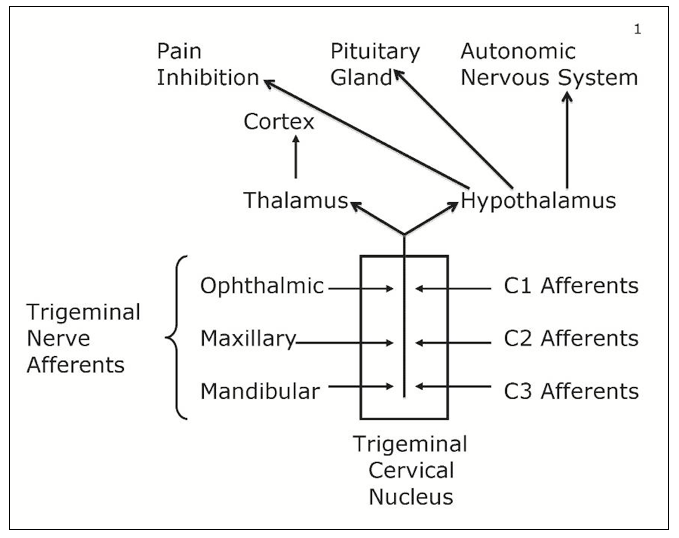
            A key component to understanding the upper cervical spine is to understand the Trigeminal-Cervical Nucleus. In his 1995 article Nikolai Bogduk, MD, PhD1 makes these points:

            The point is that the trigeminal nerve afferents and the upper cervical afferents are neuro-mechanically linked. Upper cervical spine afferent mechanoreceptors arising from the capsules, ligaments, and discs are well documented. Importantly, the sub-occipital muscles are documented to be the most densely innervated (by far) with muscle spindle mechanoreceptors.2

  • Neuroanatomical Pathways

            “Our first conscious muscular act is nursing at the breast. The neuronal pathways mediating and stipulated by nursing from the beginnings of our awareness of ‘self’ as well as the neuronal substratum upon which all future emotional and mental experience is interpreted and recorded. The tactile and oral sensations that accompany this extremely important act, namely pleasure, warmth and security, are conveyed centrally primarily by the trigeminal nerve, the trigeminal sensory nuclei in the brain stem, the trigeminal tracts, the nucleus VPM [ventral posterior medial] in the thalamus and its myriad connections.”

            “Conceivably whether a person is basically happy and content in life, whether he or she is trusting of others human beings, and whether he or she is capable of loving another human being may all depend upon the sufficient stimulation, activation and persistence of these neurons, their connections and their neurotransmitters.”

  • The Brain and Behavior:

            There are monosynaptic inputs to the hypothalamus that arise from within the trigeminal spinal nucleus. “These fibers project directly to many areas of the hypothalamus. The monosynaptic pathways provide a route for reflex autonomic and endocrine behaviors.” 

  • Integration

            The central nervous system (spinal cord, brain stem and brain) is built upon the quality of its afferent (sensory) stimulation. Apparently the first and most important sensory afferent input for the development of the synaptic array of the spinal cord, brain stem, and brain is to the trigeminocervical nucleus. The quality of the input into the trigeminocervical nucleus is ultimately linked to the following:

  • Headache perception
  • Emotional and mental experience
  • Happiness and being content in life
  • Trusting of other human beings
  • Being capable of loving another human being
  • Autonomic (visceral) nervous system function
  • Endocrine hormonal function


DISCUSSION

            The KEY is the understanding that the sensory afferent input into the trigeminocervical nucleus originates from two primary sources:

1)    Mouth/temporomandibular function (TMJ)

2)    Upper cervical spinal mechanical afferentation

These concepts are well supported by German physician Heiner Biedermann, MD.3-5 

SUMMARY

            The powerful systemic influences of upper cervical chiropractic improvement of mechanical afferentation is linked to the most important mechanical (not to mention nutritional) influences on central neurological development: breast feeding.


References

1)    Nikolai Bogduk, MD, PhD Anatomy and Physiology of Headache Biomedicine and Pharmacotherapy; 1995, Vol. 49, No. 10, 435-445.

2)    Boyd-Clark et. al., Quantitative Study of Muscle Spindles in Suboccipital Muscles of Human Foetuses; Neurology India, 2001, 49, 355-359.

3)    Kinematic Imbalances Due To Suboccipital Strain In Newborns. Journal of Manual Medicine; June (No. 6) 1992, pp151-156.

4)    Manual Therapy in Children, Churchill Livingstone; 2004.

5)    Manual medicine of functional disorders in children. Medical Veritas: The Journal of Medical Truth; 2006; Vol. 3; pp. 803-814.


Tuesday
Jul172012

New Chiropractic BioPhysics® Training Institute and Spinal Health Center will Open in Boise-Eagle, ID


VIEW PRINT VERSION

            On June 22, Drs. Deed and Shirlene Harrison, of CBP® Seminars, procured an 11,000 sq. ft. class A professional building in down town Eagle, Idaho; just outside of Boise, ID. The purpose of this building is twofold:

  1. To operate a Chiropractic BioPhysics (CBP) training facility where Chiropractors around the world, interested in learning all aspects of CBP Technique, will come to acquire the knowledge and skills necessary to practice CBP and become CBP Certified Chiropractors. Thus, part of the new facility will be a state of the art 2,000 sq. foot conference room capable of running 2-sessions simultaneously; and
  2. To operate a full scale, multi-doctor, CBP patient spine rehabilitation and health center. Currently, the Chiropractors chosen to run this CBP patient center are Drs. Deed and Shirlene Harrison, Dr. Todd Pickman, and Dr. Joe Betz.

            For Dr. Deed Harrison, this is a dream come to fruition. It has always been challenging to train Chiropractors in the technicalities and nuances of CBP Technique in a hotel conference setting without the necessary equipment (adjusting tables and instruments, traction equipment, exercise and rehabilitation equipment, and radiographic facilities). Also, the perspective of how a full scale CBP office looks, feels, functions, and operates is lost in the 'hotel convention center' environment. This new facility will solve these dilemmas. Also, CBP will launch its new Chiropractic Assistant (CA) training certification program out of this facility.

            The new CBP facility is just west of Boise in Eagle, ID and is approximately 20 minutes from the Boise international airport. The facility is located in Eagle's premiere business complex: The Eagle River Business park and is at 950 E. Riverside Drive in Eagle, ID. The amenities of this business complex are outstanding with a Hilton hotel, local favorite restaurants, parks, and a paved-maintained trail system for walking and biking along the Boise river.

            The CBP patient center is scheduled to open in October of this year (2012) while the CBP training institute will open its doors in January of 2013. Watch CBP's website (www.idealspine.com) for the 2013 conference schedule and for further details.

Tuesday
Jul172012

CBP Lumbar Extension Traction Evidenced in Two Recent RCT's

VIEW PRINT VERSION

            In the last couple of months, two new randomized controlled trials have been published having strong impact on CBP Technique protocols and procedures. These two randomized trials were authored by Ibrahim Moustafa, PhD and Aliaa Diab PhD; both from the Basic Science Department, Faculty of Physical Therapy, Cairo University, in Egypt.1,2 The two trials built on and expanded the knowledge of a previous non-randomized trial on supine lumbar extension (3-point bending) traction published by Deed E. Harrison, DC and colleagues.3

            Moustafa and Alia's trials demonstrated that lumbar extension traction increases the lordosis and improves pain, disability, and nerve function in patients with chronic low back pain1 and chronic discogenic lumbo-sacral radiculopathy2 and concomitant lumbar hypo-lordosis. For complete study abstracts see the CBP NonProfit, Inc. research update in this issue by Dr. Oakley.

  1. Moustafa IM, Diab AA. Rehabilitation for Pain and Lumbar Segmental Motion in Chronic Mechanical Low Back Pain: A Randomized Trial. Journal of Manipulative and Physiological Therapeutics Volume 35, Issue 4 , Pages 246-253, May 2012.
  2. Moustafa IM, Diab AA. Extension traction treatment for patients with discogenic lumbosacral radiculopathy: a randomized controlled trial. Clin Rehabil June 8, 2012 June 8, 2012
  3. Harrison DE, Harrison DD, Cailliet R, Janik TJ, Holland B. Changes in Sagittal Lumbar Configuration with a New Method of Extension Traction: Non-randomized Clinical Control Trial. Arch Phys Med Rehab 2002; 83(11): 1585-1591.
Sunday
Apr012012

Legitimizing Instrument Adjusting

Christopher J. Colloca, D.C.

CEO and Founder of Neuromechanical Innovations

A ISO 13485 Certified Medical Device manufacturer of the Impulse® family of adjusting instruments, based in Chandler, Arizona.


INTRODUCTION

As the popularity and utilization of Instrument Adjusting grows worldwide, mainstream acceptance continues to be hampered by outdated technology and technique approaches that are associated with traditional Instrument Adjusting techniques.  The exciting challenges of integrating chiropractic care into mainstream healthcare are subsequently plagued by the esoteric chiropractic techniques that are not accepted or recognized among general healthcare professionals.  Take for example, the Activator Method, which advocates that changes in leg length while a patient places their hand on their lower back constitutes a positive clinical finding for an L5 or L4 vertebral subluxation.  Try explaining this test to a physician or even a chiropractic colleague! 

Recently claims submitted to Aetna by Activator practitioners have been denied simply based upon the technique used.   There is also the problem of using the Activator Method isolation tests to identify a subluxation under Medicare.   So, while the Activator group should be congratulated for celebrating their 45th Anniversary in business, their decades old approach doesn’t pass the sniff test in today’s healthcare arena.

Recognizing the inherent dangers in being associated with other Instrument Adjusting approaches, our team set out to carve our mission of legitimizing Instrument Adjusting not only within chiropractic, but also to the general health care community and to the public. To this extent, our team crafted a strategic plan to assess instrument adjusting utilization and perception and to provide the improvements and enhancements necessary to advance the technique and the profession. 

Instrument delivered chiropractic care can be broken down into two parts – The instrument technology itself and the clinical application that the technique is based upon (Figure 1). 

 Figure 1. Instrument Adjusting includes the technology of the product represented by the instrument brand and the functionality or performance of the device as well as the clinical application that is taught in the clinical training that includes the indications to administer the treatment and the clinical decision making accompanying the actual technique application. 

First level strategic inputs to assess in legitimizing Instrument Adjusting include Technology development and evaluation of the Clinical Applications.  As shown in Figure 2, these inputs are driven by research and development resulting in scientific journal publications that validate the technology that is developed.  Medical Device Certifications ensure quality and further solidify the medicolegal ramifications of using instrument adjusting technology in your practice.  Through literature review, evidence-based Technique Development comprised the incorporation of clinical tests with the best evidence as inclusion criteria, and Clinical Training and practical testing to ensure clinical proficiency.  Last, efforts to increase the awareness of the Instrument Adjusting movement within chiropractic were created through a Marketing and Business Expansion effort to increase the utilization of chiropractic care by the public. 


Figure 2. Categorization of the strategic input drivers identified to legitimize Instrument Adjusting.   


  • Technology Inputs

Instead of starting with an instrument and then doing retrospective research the way instrument adjusting research has traditionally been approached, we set out to prospectively develop a new family of adjusting instruments to improve the performance and efficiency of chiropractic adjustments.  The Impulse® and Impulse iQ® Adjusting Instruments were born of this research.

We quantified the forces and speeds that were necessary to maximize vertebral motions and neuromuscular responses (1,2) and investigated how instrument delivered thrusts differed among normal and pathological states such as disc degeneration and muscle hyperactivity (2-4).  We then compared our new technology to existing adjusting instruments in the market and demonstrated the superiority of the biomechanical characteristics of the new Impulse® Adjusting Instruments (5,6).  Validation of a new non-invasive method of dynamic spinal stiffness assessment was conducted and published it in the Journal Spine (7).

  • Medical Device Certifications

To meet the growing demand for our products, I began a new medical device manufacturing company to manufacture the devices to the required specifications.   We created several new jobs and instituted a Quality Management System to drive our business that fostered our ISO 13485 Medical Device Certification.  Independent audits conducted in our facility ensure the safety and efficiency of our systems and procedures and our products UL Listing® attests to the high standards we hold.  Our international growth pushed us to receive our Class II Medical Device Certifications throughout the World.  Manufacturing a chiropractic device to the highest quality medical standards allows our equipment to be used in hospitals as well as private chiropractic clinics further serving the purpose to legitimize instrument adjusting.

  • The Instrument Adjusting Problem - Esoteric Techniques

Unfortunately however, Instrument Adjusting has been traditionally associated with esoteric chiropractic analyses that border on summoning the supernatural.  Followers of the Activator Method stare at the feet looking for leg lengths to change while asking the patient to put their arms on their back or over their head to confirm a vertebral subluxation at a specified level.  Without any validation whatsoever, these arm movement are assigned to a particular vertebral segment and flexing the legs supposedly tells the clinician what side to adjust the patient on.  Borrowed and adapted from Directional Non-Force Technique (DNFT), Activator technique is closer to Network and Applied Kinesiology with its leg checks, pressure tests and challenges that are seen by many as nothing short of strange and indefensible.

Without any credible explanation or rationale at all behind this analysis, the Activator Method is taught in our chiropractic colleges and in college sponsored post-graduate education courses.  There aren’t too many chiropractic techniques that could be more far-fetched; yet, Activator Methods boasts that approximately 150,000 chiropractors have been trained in the technique.  It’s hard to understand how this is even possible when there are approximately 50,000 chiropractors practicing in the USA and 90,000 abroad (8).  Another descendant of DNFT, Koren Specific Technique, advocates that you can “adjust disks … see dramatic retracting … and specifically analyze and adjust yourself.”  Rather than passing judgment, let’s have you decide for yourself what type of Instrument and technique method that you would like to subscribe.  At the very least, I think you can understand why I felt the need to legitimize instrument adjusting.

  • Clinical Application Inputs

            In developing Impulse Adjusting Technique (the clinical application training accompanying our products), we knew that we needed to incorporate logical, clear and readily acceptable objective assessments that were validated, accepted, and easy to perform.   We embraced the Centers for Medicare (CMS) Services mandated P.A.R.T. analysis to keep chiropractors in compliance with regulations and increase their reimbursements at the same time.  Incorporating accepted orthopedic tests combined with static palpation, and range of motion assessment of the spine and extremities, Impulse Adjusting Technique® considers the patients response in terms of their pain response (P), asymmetries (A), restrictions in range of motion (R) and the texture and tone changes in the muscles (T) as clinical indicators.  With this approach, the most valid clinical indicators are incorporated and a straightforward patient encounter on each visit can subjectively and objectively track patients’ progress consistent with the chiropractic standard of care.

Clinical training in the Impulse Adjusting System® is offered in most U.S. Cities and many international destinations.  Didactic and practical sessions are offered in the proper product usage and clinical applications training.  A written and practical certification examination is offered to measure student’s proficiency.  We have further developed a business and marketing expansion module to assist chiropractors in promoting and marketing their unique niche in chiropractic practice.  More information can be found online at www.impulseseminars.com.

Legitimizing instrument adjusting and advancing the chiropractic profession begin with raising the standards of the products offered to DC’s replacing nonsensical chiropractic analyses with those techniques that have stood up to the scrutiny of research. 


References


Sunday
Apr012012

Chiropractic Today and Tomorrow

Randall Hammett, DC

Private Practice of Chiropractic


INTRODUCTION

To be or not to be, is the final question for chiropractic. I believe that chiropractic will survive in the future, but I am not sure in what form. With small groups of confused and disillusioned chiropractors trying to ape to medical doctors by trying to prescribe drugs or becoming  spa owners by  performing cosmetic alterations or poking holes in the body with needles to stimulate or inhibit yin or yang. The whole profession seems to be confused about what it is and isn’t, and is the public.

In these economic times, as with the past poor economic times, chiropractors jump to fringe of healthcare or in other words they try anything to make a buck. Don’t get me wrong, there is still a strong undertow of traditional chiropractic out there, but every year it seems to weaken.  Chiropractors sucking at the trough of ever lessening insurance coverage look to supplement their incomes outside chiropractic. In the main, this is not a bad idea from a business standpoint of view but the main problem is with the public’s perception.

The perception in the public is that chiropractors are back doctors or are they? Our fate was sealed years ago when we did not demand our own set of Chiropractic CPT Codes and now we have pigeonholed ourselves into the “back business” instead of the health business. Chiropractors who are desperate for more business profess “Wellness” clinics at the same time the medical profession is doing the same. If history has taught us anything about chiropractic, it is that when a chiropractor stands upon the platform of correcting nerve interference his or hers practice thrives with or without insurance. BJ Palmer warned us years ago of what is now become the norm in chiropractic. Meaning, chiropractors educated without the knowledge of when, where and where not to adjust for nerve interference is the norm. But boy, can they pass board exams. Chiropractic colleges of today are not even calling themselves chiropractic colleges, not because chiropractic doesn’t work, but because they need more money to survive. So, I have to ask you what chiropractic is to you, because that’s what it has become to your patients. Is it correcting vertebral subluxation or is it physical, nutritional or laser therapy, weight control or spa services such as pedicures and manicures?

You see we’ve already screwed up chiropractic pretty good by confusing the public on when they need a chiropractor and when they don’t. We have further gone the wrong direction, in my opinion, by not emphasizing and all agreeing that our profession is about what its founder said it was.  Don’t get me wrong, people need therapies, advice on nutrition and exercises that they are not getting from the medical profession and we should give it to them and charge a fair fee, but the emphasis of a chiropractic office must be about correcting nerve interference.  As we move further away from this, I predict that there will be a schism in the profession and that you will have to decide what type of chiropractic you are going to practice and accept the consequences of your decision. If you are looking for your practice to grow and to be re-energized you only need to look at your precision in finding and correcting nerve interference, treating your patients with respect and earning their trust as their family doctor, not as their “wellness” doctor.    

SUMMARY

I know this for the truth, that the public is hungry for the old family doctor. The role their medical physician can no longer fill, but you can. Focus on becoming your patient’s family doctor, not just a sign on your clinic that says “family practice”, but truly a doctor who families will come to see and trust as they once did 50 years ago. If you want a better practice give your patients what they want… A real Doctor!  Till next time…


Page 1 ... 2 3 4 5 6 ... 17 Next 10 Entries »